Sizing Raw Linen with Modern Polyvinyl Acetate vs. Glue
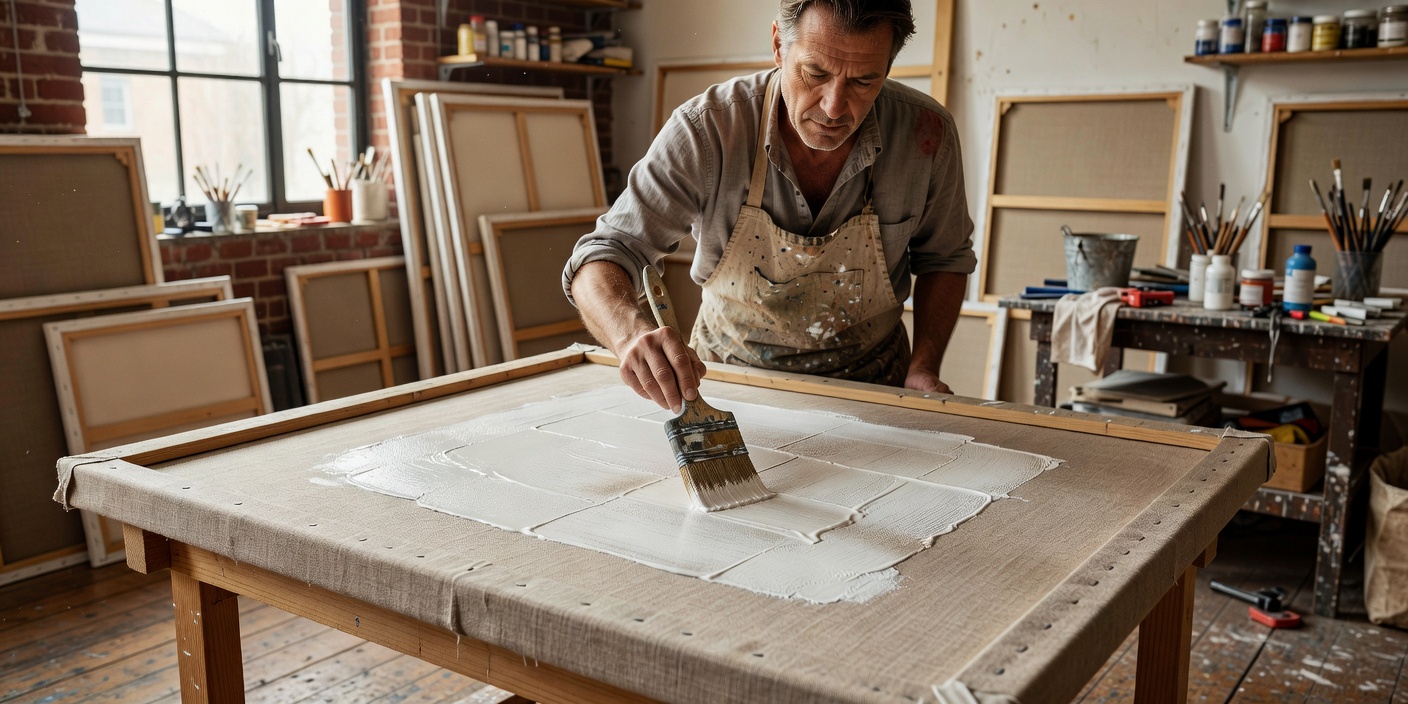
The durability of an abstract canvas begins far beneath the topmost pigment layer. Every brushstroke, stain, and heavy impasto ridge exerts mechanical pull upon the fabric foundation. Sizing seals the organic cellulose or bast fibers from atmospheric humidity, oil rot, and adhesive degradation.
The Vulnerabilities of Traditional Rabbit Skin Glue
For centuries, animal collagen (rabbit skin glue) represented the pinnacle of canvas sizing. Mixed at a 1:13 ratio in warm distilled water, it contracts vigorously upon cooling, drum-tightening Belgian flax linen onto hardwood stretcher frames. However, animal collagens are hygroscopic; they continuously absorb and release atmospheric vapor.
In contemporary exhibition environments where relative humidity fluctuates between 35% and 65%, rabbit skin glue expands and contracts constantly. Over decades, this microscopic oscillation induces brittle spider-web cracking in rigid oil paint films, particularly in large non-representational works where untextured fields reveal every surface fracture.
Polyvinyl Acetate (PVA Size 112): Archival Neutrality
Modern conservation science endorses neutral pH polyvinyl acetate (specifically formulated PVA size like Lineco or Gamblin PVA) as the preferred barrier for raw linen. PVA does not tighten the canvas fabric artificially, preventing strain on corner joints, nor does it yellow or biodegrade.
Because PVA remains inert in varying humidity, the paint layer rests upon a dimensionally stable substrate that neither tightens nor sags with changing seasons.
| Property | Animal Collagen (Hide / RSG) | Polyvinyl Acetate (PVA 112) | Acrylic Gesso Direct |
|---|---|---|---|
| pH Stability | Acidic drift over time (pH 4.8 - 5.5) | Neutral Archival (pH 7.0 - 7.5) | Slightly Alkaline (pH 8.0) |
| Hygroscopic Response | Severe expansion / contraction | Negligible moisture uptake | Low moisture uptake |
| Fabric Tightening | High tension contraction | Zero artificial contraction | Mild tightening |
| Linen Preservation | Moderate barrier to oil acids | Complete non-porous seal | Requires 2+ coats to seal oil |
Step-by-Step Atelier Sizing Protocol
- Dry Stapling: Stretch raw Belgian flax linen tightly on heavy mortise-and-tenon stretcher bars with cross-bracing.
- First Coat Application: Brush undiluted PVA size onto the canvas with a wide Japanese hake brush, working in circular gestures to penetrate weave interstices without soaking through to the reverse.
- Fiber De-whiskering: Allow 6 hours for the primer to dry. Lightly abrade raised linen fuzz using 320-grit silicon carbide sandpaper.
- Sealing Coat: Apply a second cross-grain thin coat. The substrate is now fully insulated for either direct oil glazes or chalk gesso application.